
Which Are The Best Oxford Colleges?
Back
If you’ve ever pictured yourself walking through grand courtyards, sipping coffee beside ancient stone walls, or revising by the River Thames, you’re probably already hooked on the idea of studying at Oxford. But with more than 30 colleges that each boast their own traditions, histories, and personalities, one question always comes up… which are the best Oxford colleges?
At Oxford, your “college” is basically your home base, where you live, eat, study, and hang out with friends. From grand old libraries and cosy dining halls to lively bars and common rooms, each one has its own vibe. You’re part of both your college and the wider University, so you get the best of both worlds: a close, supportive community plus all the opportunities Oxford has to offer.
Whether you’re after a lively, modern atmosphere or centuries-old prestige, there’s an Oxford college to suit every student. This guide dives into the Oxford colleges list, the pros and cons of college life, and the standout names on the Oxford college rankings, plus plenty of tips for finding the best student accommodation for you once you’ve picked your dream spot.
Oxford Colleges Pros and Cons
Every Oxford college has its own vibe. Some are steeped in centuries of tradition, while others feel bright, modern, and a little more relaxed. Here’s what to consider when comparing Oxford colleges’ pros and cons.
Pros of Oxford Colleges
- Tight-Knit Communities
Each Oxford college feels like its own little world; a mini campus where everything you need is right on your doorstep. From grand libraries and buzzing bars to student-run societies and sports teams, you’ll find endless ways to get involved. Because colleges mix students from all years and subjects, it’s easy to build friendships across different courses. Before long, you’ll know everyone from your tutor to the barista in the college café, and that sense of belonging really makes Oxford feel like home.
- Incredible Settings
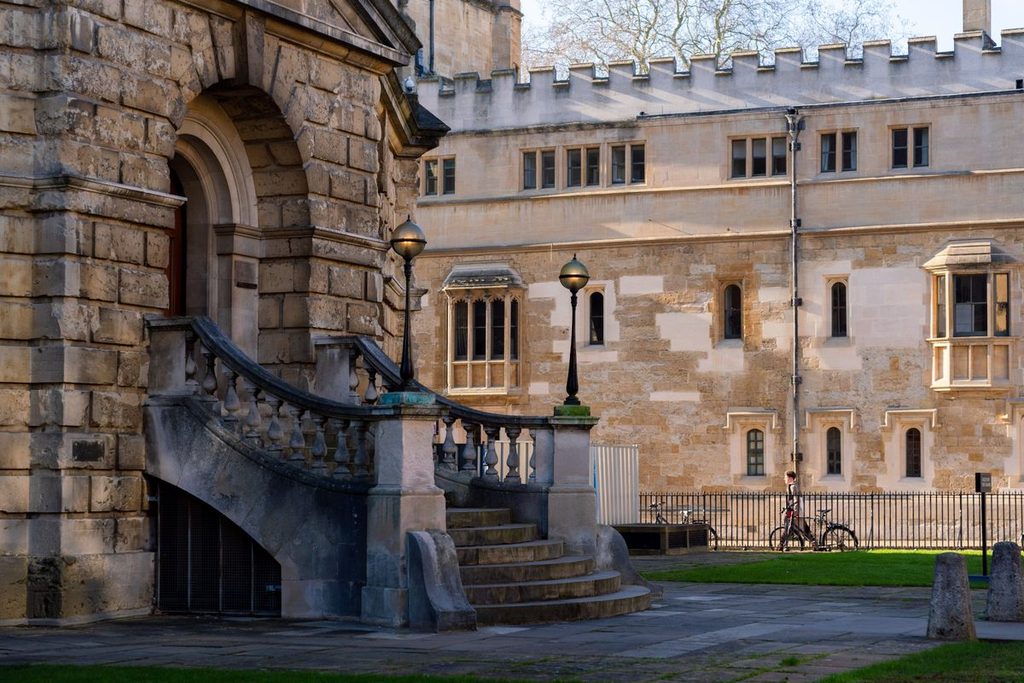
The prettiest Oxford colleges are genuinely magical. Think ivy-covered walls, cobbled courtyards, and lawns that look too perfect to walk on (though some colleges will let you!). Magdalen’s riverside grounds and deer park feel like something out of a film set, while Merton’s dreamy spires and peaceful gardens are straight from a postcard. Whether you’re revising in a centuries-old library or having coffee under an ancient archway, studying here feels like stepping into history every day.
- Academic Support
Oxford’s famous for its tutorial system, where small groups meet regularly with a tutor to discuss work in depth. It’s intense but incredibly rewarding. Your college plays a big role in this, offering tailored academic support, study spaces, and even funding for research or projects. Whether you’re tackling your first essay or preparing for finals, there’s always someone to guide you, be it dedicated tutors or older students who’ve been through it all before. When working on essays and research projects, correctly acknowledging your sources is essential. Our Harvard referencing guide explains how to format citations and reference lists clearly.
- Tradition and Pride
Every college has its own unique story, often stretching back hundreds of years. They all have traditions and quirks that make them special, whether that’s formal dinners and rowing rivalries or annual balls and secret student societies. The sense of pride runs deep; you’ll soon find yourself cheering your college team, wearing your college colours, and swapping stories about its famous alumni.
Cons of Oxford Colleges
- Competition
Getting into Oxford is competitive enough, and the most prestigious Oxford colleges make it even tougher. The most famous and historic ones, like Christ Church or Magdalen, often attract thousands of applicants every year. That doesn’t mean your chances are lower overall, though. If a college is oversubscribed, Oxford’s central system can reallocate you to another college.
- Varying Costs
Not all Oxford colleges are created equal when it comes to costs. Accommodation prices, meal plans, and even laundry fees can vary quite a bit. Some colleges offer subsidised dining or lower rent for shared rooms, while others include extras like ensuite bathrooms or on-site gyms. It’s worth checking what’s included before applying. If you’re looking for that same community feeling, consider opting for purpose-built accommodation like Now Student Living’s student housing in Oxford, Between Towns Court.
- Different Atmospheres
Each college has its own personality, so not every college will suit every student. Some, like Balliol or St John’s, have a reputation for being lively and social, while others, such as Merton or Pembroke, are known for their quieter, more academic vibe. You’ll find everything from sporty colleges to artsy ones, modern buildings to ancient quads.
- Location
Oxford’s colleges are scattered across the city, and location can make a big difference to your day-to-day life. Central colleges put you right in the heart of the action, just steps away from shops, cafes, and lecture halls, but these are often busier. Colleges a little further out, like St Hugh’s or Lady Margaret Hall, offer larger grounds, quieter surroundings, and often more affordable accommodation. It’s all about what kind of Oxford experience you want: city buzz or leafy calm.
Whether it’s academic intensity, architecture, or simply where you feel you’ll fit in best, choosing the right college all depends on your priorities.
Oxford Colleges List
Oxford is made up of 44 colleges in total: 39 main colleges and 5 smaller Permanent Private Halls (PPHs). Each one has its own unique history, character, and academic focus, giving every student a slightly different experience. When you study at Oxford, you’re part of both your college community and the wider University, so you get the best of both worlds. Here’s a brief list of Oxford colleges you’ll come across when exploring your options:
Constituent Colleges
- Balliol College
- Brasenose College
- Christ Church
- Corpus Christi College
- Exeter College
- Green Templeton College
- Harris Manchester College
- Hertford College
- Jesus College
- Keble College
- Kellogg College
- Lady Margaret Hall
- Linacre College
- Lincoln College
- Magdalen College
- Mansfield College
- Merton College
- New College
- Nuffield College
- Oriel College
- Pembroke College
- Queen’s College
- Reuben College
- St Anne’s College
- St Antony’s College
- St Catherine’s College
- St Cross College
- St Edmund Hall
- St Hilda’s College
- St Hugh’s College
- St John’s College
- St Peter’s College
- Somerville College
- Trinity College
- University College
- Wadham College
- Wolfson College
- Worcester College
- All Souls College (postgraduate/fellows only)
Permanent Private Halls
Blackfriars
Campion Hall
Regent’s Park College
Wycliffe Hall
Each one has its own history and personality, which you can explore on Oxford’s official website or by visiting during an open day.

Understanding The Norrington Table
If you’re comparing by reputation or results, you’ll often see references to the Norrington Table, which ranked colleges based on degree performance.
Last updated in 2022, it ranked the university colleges using scores gathered from students’ results. Five points were awarded if a student earned a First-Class degree; three were given for an Upper Second-Class (2:1), two points for a Lower Second-Class (2:2), and one point for a Third-Class degree.
It’s one way to get an idea of academic standing, though it’s worth remembering that the best Oxford college for you depends just as much on your interests, lifestyle, and subject choice as on where a college sits in the Oxford colleges ranking table.
Our Picks For Best Oxford Colleges
With so many incredible choices, narrowing down the best Oxford colleges is no easy task. But here are ten standout colleges that impress with their history, atmosphere, and student experience.
Christ Church Oxford
Arguably the most famous Oxford college, Christ Church is iconic, and not just because parts of Harry Potter were filmed at its staircase. Founded in 1546, it’s one of the larger colleges, with a community of around 450 undergraduates. Its St Aldate’s location puts the city centre on one side and Christ Church Meadow on the other.
If you’re comparing courses, its list includes Fine Art, Medicine and Philosophy, Politics and Economics (PPE). Students can usually stay in college accommodation throughout their degree, with meals in the famous hall, and there’s also a music room and performance space. It could be a lovely fit if you want grand architecture and a sizable community close to town.
Balliol College
One of Oxford’s oldest colleges, Balliol dates back to 1263 and is known for its friendly atmosphere and spirited debate. Its undergraduates study a broad range of subjects, including Philosophy, Politics and Economics (PPE), Engineering Science, and History and Economics.
You’ll find it on Broad Street, near the Bodleian Library, though some accommodation is in a modern annexe on Jowett Walk, around a five-minute walk away. College accommodation is available throughout the course, and a 24-hour library and on-site gym give you useful places to study and unwind. If you like being right in the thick of things, put Balliol on your visit list!
Magdalen College
Magdalen (pronounced “Maud-lin”) is easily one of the prettiest Oxford colleges. Set beside the River Cherwell, it’s famous for its deer park, cloisters, and May Morning celebrations.
The course list includes Music, Computer Science and Medicine, with several Nobel Prize Winners as college alumni! You can live in college accommodation for your whole course; the High Street site is around a ten-minute walk from the city centre and Science Area. There are also nine tennis courts, an all-weather pitch, and a 24-hour library, so it’s perfect for working out both the body and mind.
St John’s College
St John’s College is considered one of the most academically successful colleges. As well as boasting excellent facilities, spacious accommodation, and stunning gardens, students study a range of courses, including Human Sciences, Fine Art and History and Economics.
Just off St Giles’, it’s handy for the city centre and Science Area, while its gardens offer a quieter spot between lectures. On-site rooms are guaranteed for the duration of a degree, and students have a library study centre, gym, café and opportunities in art, music, sport and drama. Wherever you choose to study, learning how to study effectively can help you manage Oxford’s demanding workload and get more from each study session.
New College Oxford
Don’t be fooled by the name… New College was founded in 1379, making it one of the oldest Oxford colleges. Known for its harmonious architecture and supportive community, it’s consistently ranked among the most popular Oxford colleges for both undergraduates and graduates.
It’s a large central college, with a community of around 400 undergraduates, so you get historic buildings alongside a great student vibe. Its courses include Fine Art, Computer Science, and Economics and Management. Music lovers can make use of the Clore Music Studios, while the sports ground and newer Gradel Quadrangles are a few minutes from the main college site. It’s a tempting mix of old Oxford and spaces built for modern student life.
Merton College
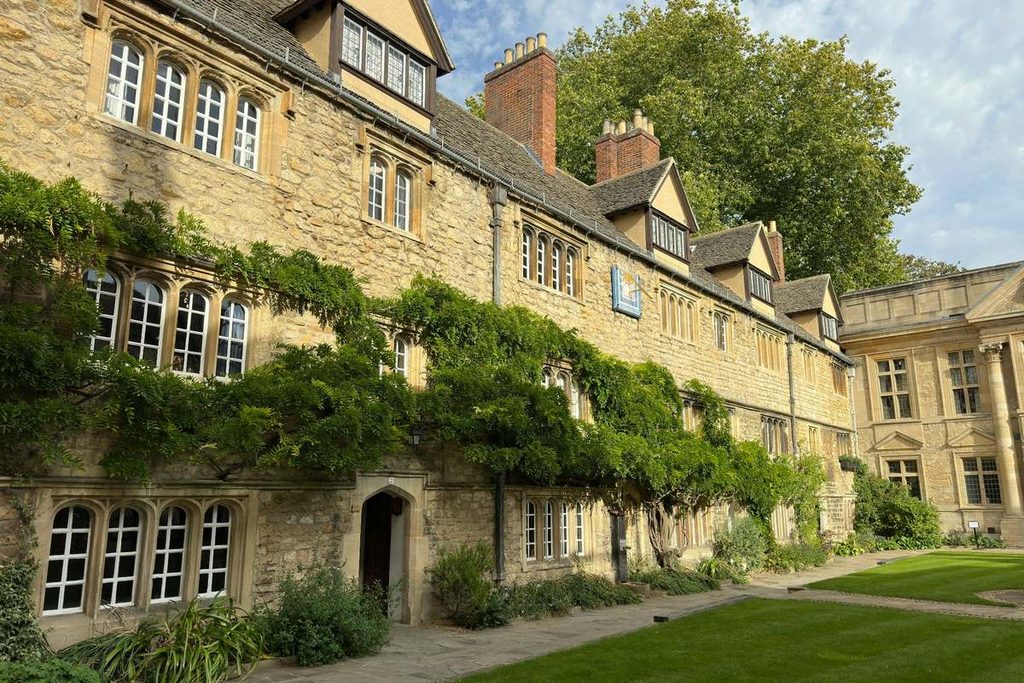
Founded in 1264, Merton is steeped in history and has a reputation for academic excellence. Its 300+ undergraduates make it smaller than several colleges in our list, and it tends to attract hardworking students who value peace, tradition, and scholarly focus.
It sits off the High Street near meadows and University libraries, with an annexe near the Science Area. Students can live in college-owned accommodation throughout their course, and facilities include five music practice rooms and a lecture theatre. Courses include PPE, Computer Science and Physics and Philosophy. A quiet academic setting might appeal if you like having somewhere peaceful to focus. (Using the Pomodoro Technique can also help you break long reading lists into manageable chunks.)
Oriel College
Sometimes described as the ‘heart of Oxford’, Oriel is close to the city centre, Bodleian Library, and Christ Church Meadow. Around 300 undergraduates belong to Oriel College, making it one of the smaller picks.
Its course list includes Computer Science, Engineering Science and Classics, so students study a range of subjects. Oriel offers accommodation throughout undergraduate study, and its 24-hour library, music room, boathouse and regular formal dinners make it easy to find your own rhythm. If you’d prefer a smaller community without giving up a central location, it’s well worth a look.
Somerville College
Once a women-only college, Somerville has a progressive, inclusive reputation that appeals to modern students. It was founded in 1879 and boasts an undergraduate community of around 400 today. You’ll find it by the Radcliffe Observatory Quarter, with gardens at its centre.
Its course list includes Medicine, Engineering Science and PPE. All undergraduates can live on the main college site for every year of their degree, and its 24/7 library holds around 100,000 items (including rare books and special collections). Somerville is also known for its choir and annual Arts Week, which features student-led exhibitions and performances!
Wadham College
Known for its creativity and welcoming culture, Wadham has a vibrant student community, welcoming everyone from artsy types to scientists. With a community of around 440 undergraduates, it’s one of the bigger colleges in our list.
Students study a range of courses, including Computer Science, History of Art and PPE, and some Oxford Foundation Year routes. The main college is central, across from the Bodleian Library, but some second-year accommodation is in the Dorothy Wadham Building on Iffley Road, so it’s worth looking at both locations. College accommodation is offered for each undergraduate year, and there’s a 24-hour library, an undergraduate study centre, and the annual Wadstock music festival!
St Catherine’s College
More affectionately known as Catz, St Catherine’s has striking 1960s architecture and a friendly, down-to-earth feel. It’s one of the largest undergraduate communities here, with around 470 students. Its broad course list includes Materials Science, Fine Art, and Computer Science. Most undergraduates live in college for three years, and the site has a gym, squash courts, music space and indoor and outdoor performance areas. If you prefer a modern setting with plenty going on, Catz deserves a look.
FAQs About Oxford University Colleges
Got some more burning questions about Oxford’s colleges? We’ve answered some of the most frequently asked questions down below.
What are the Oldest Oxford Colleges?
The oldest Oxford colleges include: University College, Merton College, and Balliol College, all both founded in the 13th century.
What are the Biggest Oxford Colleges by Size?
The largest colleges by student population include St Catherine’s, Christ Church, and St John’s. Their spacious campuses offer modern facilities, extensive libraries, and buzzing social calendars.
What are the Most Prestigious Oxford Colleges?
The most prestigious Oxford colleges often include Magdalen, Christ Church, St John’s, and Merton.
That said, prestige isn’t everything. Sometimes the best Oxford college is the one where you feel most comfortable.
What are the Prettiest Oxford Colleges?
Magdalen, New College, and Christ Church are often voted the prettiest Oxford colleges, with postcard-perfect quads, riverside walks, and ivy-covered towers that make studying feel straight out of a fantasy novel.
FAQs About the University of Oxford
Now that we’ve gone through the Oxford College basics, let’s answer some of the most frequently asked questions about the University of Oxford itself.
How Old is Oxford University?
Wondering when Oxford University was founded? It’s the oldest university in the English-speaking world. While the exact date is unclear, teaching existed in some form as early as 1096. So if you’ve ever wondered how old Oxford University is, the answer is: nearly a thousand years!
What are Oxford University’s Rankings?
Oxford regularly tops global university league tables. In most ranking lists, it sits at or near number one, often trading places with Cambridge and Harvard. That consistent performance explains why it’s considered one of the best universities in the world.
How Many Colleges are there in Oxford University?
Oxford has 43 institutions, including 39 colleges and four permanent private halls.
How Do I Get into Oxford University?
If you’re wondering how to get into Oxford University, you’ll already know that it’s a competitive game, but totally achievable with the right preparation. You’ll need strong grades, an impressive personal statement, and great interview skills. Each college has its own admissions tutors, so researching the Oxford colleges list helps you find the best fit before applying.
How Much is Oxford University?
Tuition varies depending on your nationality and course. For 2026/27, the undergraduate course fee for students with Home fee status is £9,790, and Oxford lists £10,050 for 2027/28 entrants. Keep in mind you’ll also need to budget for accommodation and living costs, so learning how to make your money stretch as a student is essential.
Is Oxford University in London?
No, Oxford is its own beautiful city about 60 miles northwest of London. It’s smaller, safe, and full of historic charm, making it ideal for student life.
Is Oxford Better Than Harvard University?
The Oxford vs Harvard debate is eternal. Both are world-class institutions. While Harvard excels in research funding and global influence, Oxford shines for its tutorial system and traditions. Ultimately, deciding whether Oxford is better than Harvard depends on what you value most: academic rigour, culture, or lifestyle?
What is Oxford University Known For?
Oxford is renowned for academic excellence, groundbreaking research, and famous alumni. From world leaders to writers, countless icons have passed through its halls. It’s also known for its unique college system, which gives it a strong sense of community. Oxford students also have access to a wide range of professional and career opportunities. When applying for work experience, our guide to writing a standout internship cover letter can help you make a strong, lasting impression.
Is the University of Oxford Hard to Get into?
Yes. Oxford has one of the most competitive admissions processes in the world. But with the right preparation, strong grades, and genuine passion for your subject, it’s entirely possible to secure a place at one of the best Oxford colleges.
Book Your Student Accommodation in Oxford
Found your dream college? Then it’s time to sort your new home. Whether you’re moving into halls or looking for private student accommodation, finding a comfortable place to live is just as important as choosing your college.
With modern, fully furnished spaces, you can focus on your studies and enjoy student life to the fullest. Between Towns Court is close to all of the action, where you can indulge in that sense of community from day one. So what are you waiting for? Book your student accommodation in Oxford with Now Student Living today!
